01
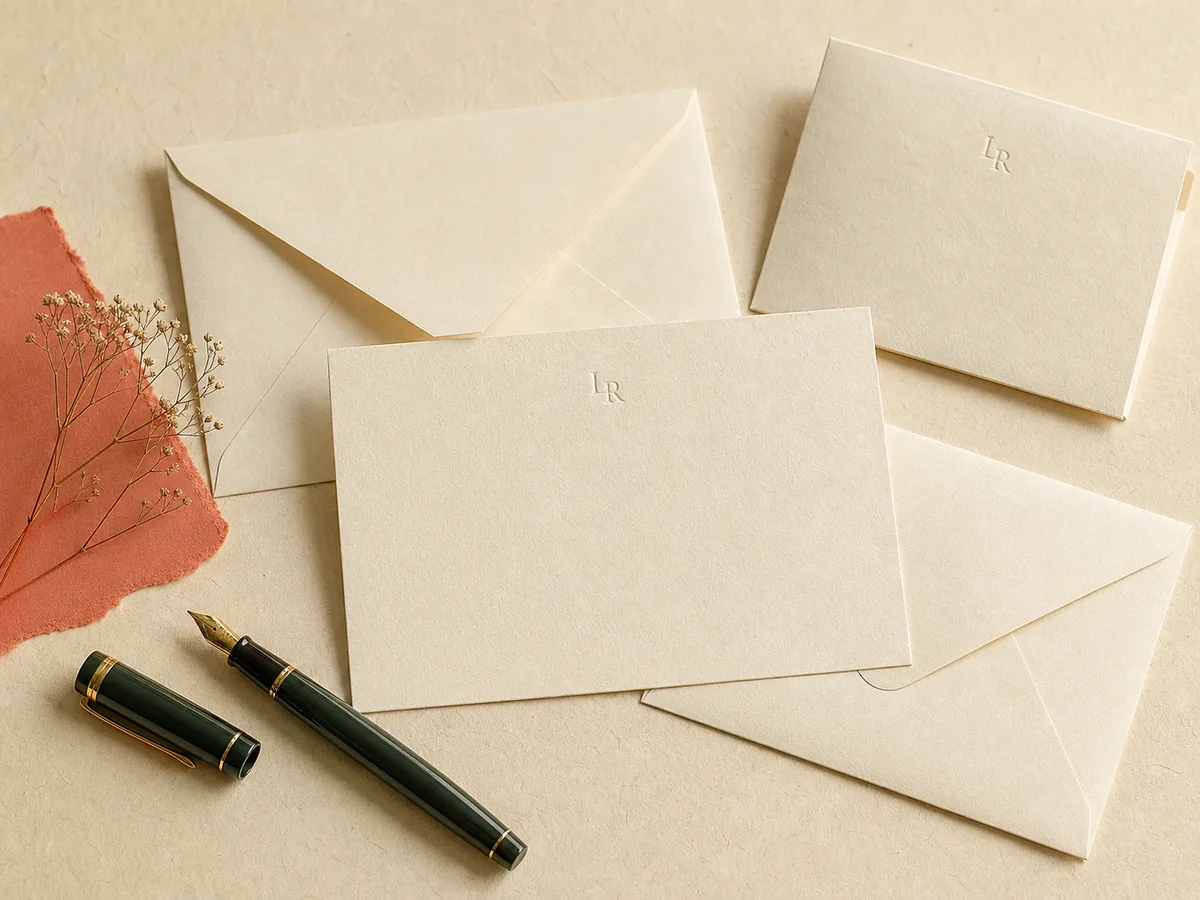
Choose the format from your normal letter length
Flat sheets are flexible for long letters and easy to continue onto a second page. Folded notes feel finished quickly but can become cramped. Correspondence cards work best when the message is intentionally short.
Count usable letters, not pieces in the box. Twenty-five sheets and twenty-five envelopes may be twenty-five short letters—or twelve longer ones with an extra sheet left over.
- Flat sheets for one-to-three-page letters
- Folded notes for short thank-yous and check-ins
- Cards for a deliberate, compact message
- A5-scale sheets when you want less visual pressure than office paper
02
Choose the best paper for fountain-pen letters
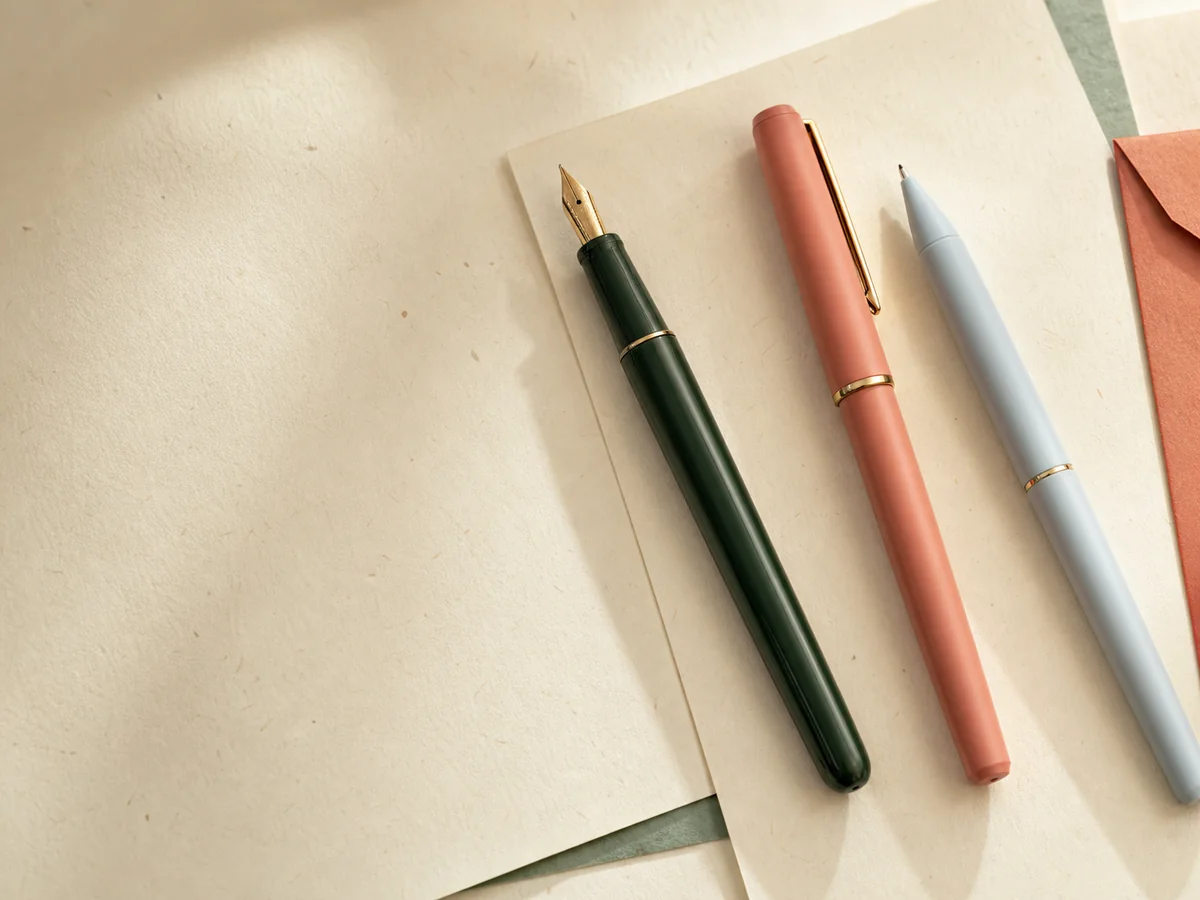
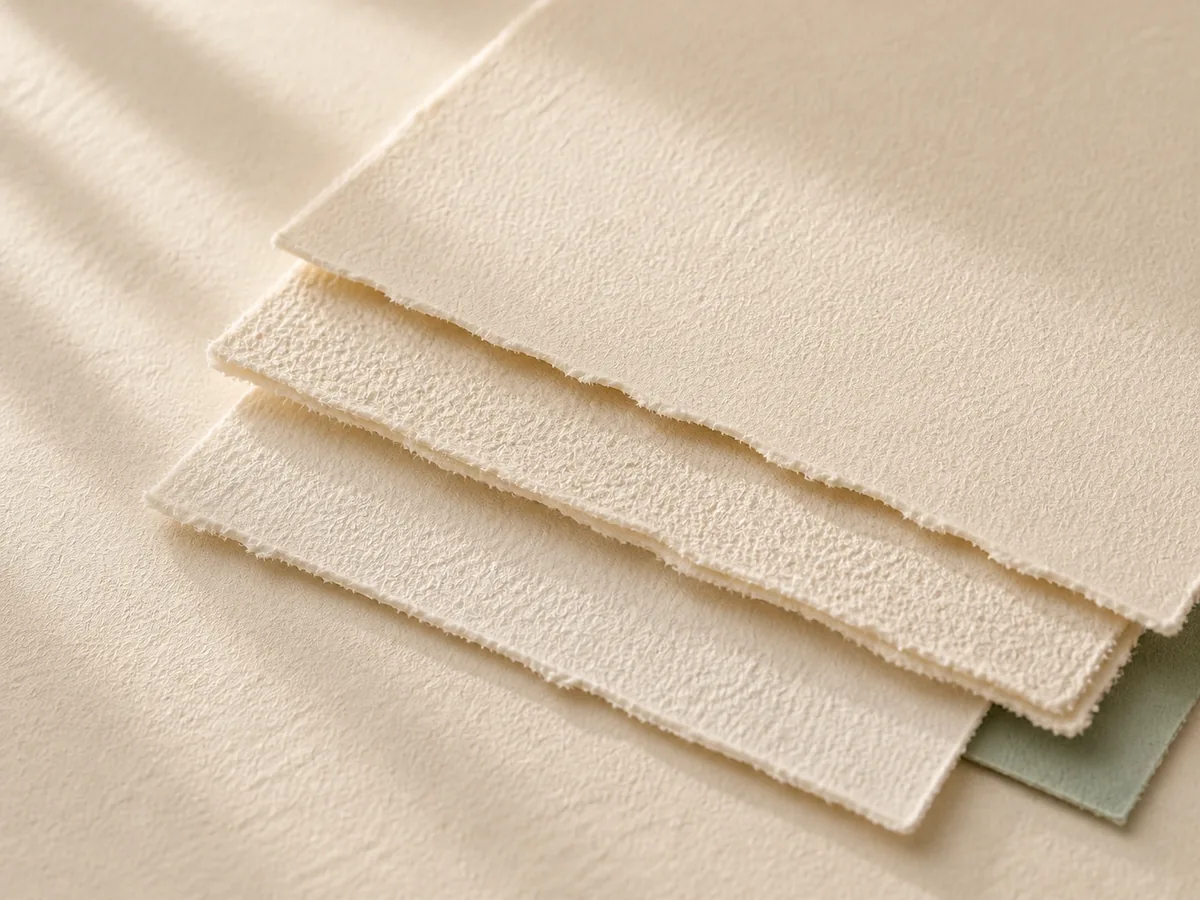
The best paper for writing letters with a fountain pen is the one that works with your actual nib and ink. Smooth paper can make a fine nib feel freer; more textured paper can add control but may catch a very sharp point. Absorbent paper may feather or show through, while heavily coated paper can extend dry time.
There is no single best surface. Write a paragraph, pause with the nib on the page, turn the sheet over, and fold it once. That small test reveals more than a paper-weight number alone.
03
Make the envelope part of the decision
A letter is not finished until the paper folds cleanly into the matching envelope. Check how many folds are required and whether the finished packet stays evenly thick after you add a card, photograph, or sticker sheet.
For ordinary automated mail, the calmest result is rectangular, flexible, securely closed, and comfortably within your postal service’s current size and thickness rules.