01
Choose the ink system before the pen body
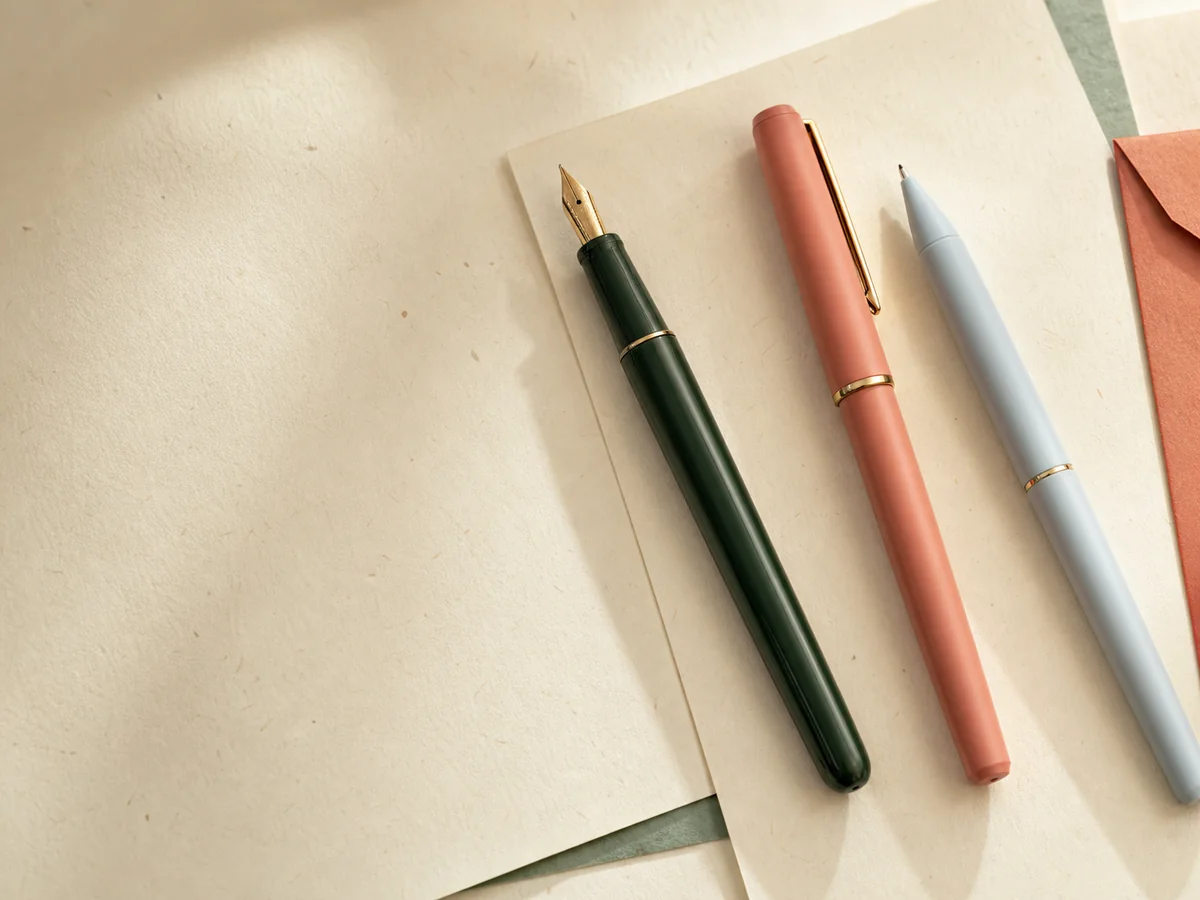
Traditional ballpoint ink is dependable, quick to start, and tolerant of ordinary paper, but it often asks for more writing pressure. Low-viscosity or hybrid ballpoint ink reduces that drag while keeping the practical click-and-write experience. For a first dedicated letter pen, this is the safest place to begin.
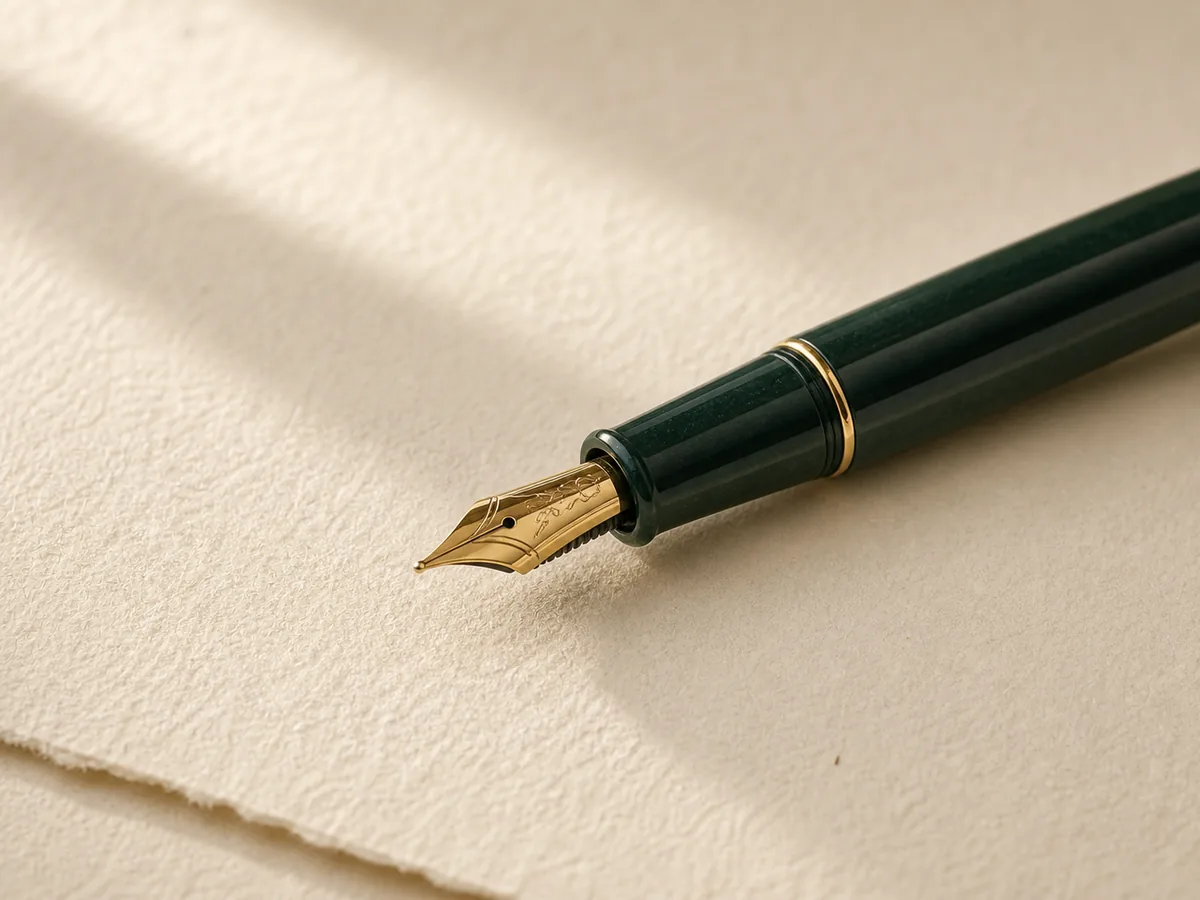
Gel ink can feel smooth and comes in expressive colors, but formulas vary in dry time and permanence. Rollerball ink lays down a dark, fluid line with little pressure, though the wetter flow may feather on absorbent paper. Fountain pens use the lightest touch and offer the most choice, but the nib, ink, and paper have to work as one system.
- Ballpoint or hybrid: easiest on mixed paper and everyday mail
- Gel: vivid color and low pressure; check smudging before folding
- Rollerball: dark, fluid lines; allow more drying time
- Fountain pen: expressive and refillable; most dependent on paper
02
Match the point size to your handwriting and paper
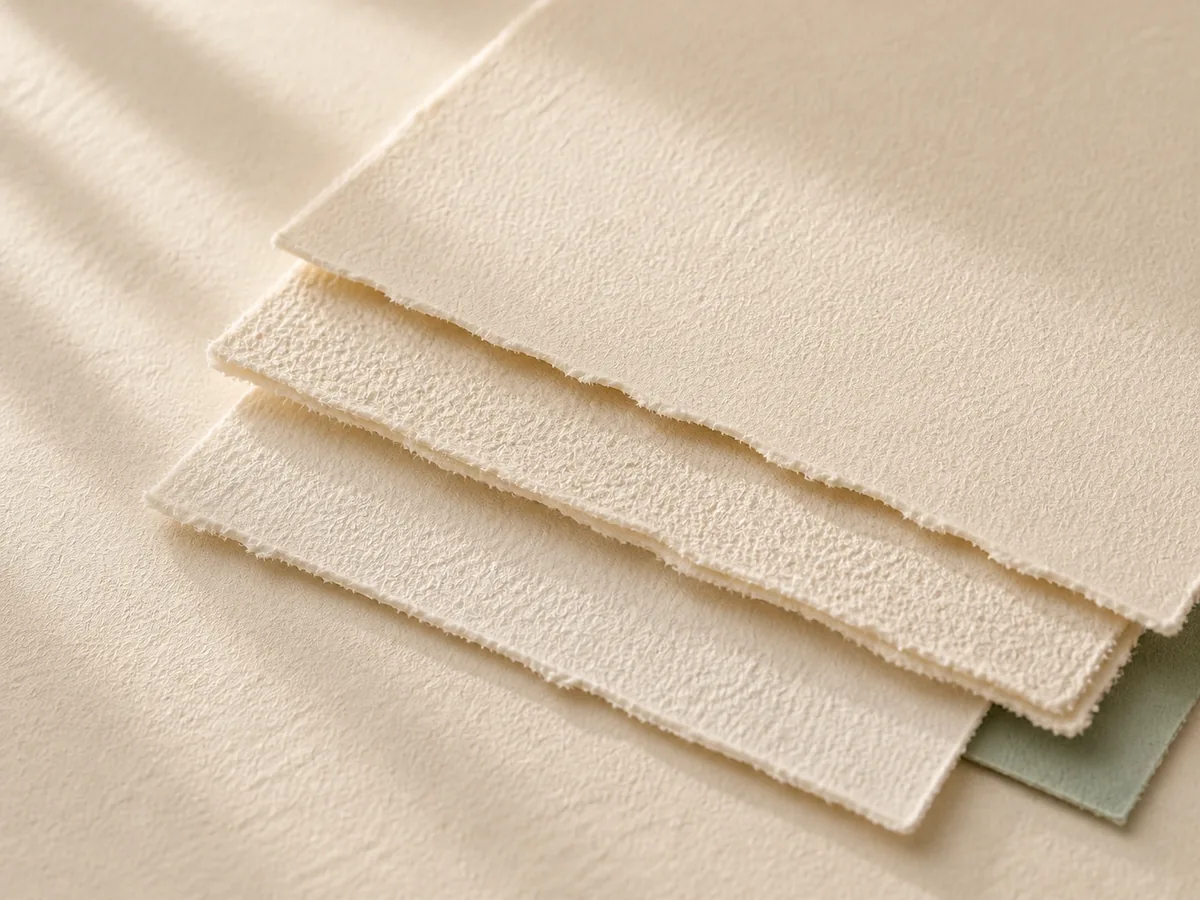
Small handwriting, narrow lines, and absorbent paper usually favor a finer point. Larger handwriting and smoother stationery can carry a medium point without closing the spaces inside letters. Point labels are not perfectly standardized, so treat the number or nib name as a starting clue rather than a guarantee.
Run one useful test before committing: write eight ordinary lines, pause with the pen uncapped, swipe a clean finger across a word after five and ten seconds, then inspect the back of the sheet. You are checking start-up, comfort, smudging, feathering, show-through, and bleed-through—not whether the handwriting looks unusually polished that day.
03
Judge comfort at page two, not line two
A pen can feel impressive for thirty seconds and tiring by the second page. Grip diameter, weight, balance, surface texture, and the amount of pressure required all matter more during a long letter than decorative trim or a presentation box.
Write with the cap both posted and removed when the design allows it. Notice whether your fingers creep toward the tip, whether a sharp step or thread presses into your grip, and whether the pen makes you squeeze harder as your hand tires. The correct balance is the one that lets your grip stay quiet.
- Your fingers remain relaxed through two handwritten pages
- The pen does not become top-heavy with the cap posted
- The grip stays secure without a tight pinch
- The ink flow keeps up without repeated scribbling or pressure
04
Buy the refill system before you buy the finish
A beautiful pen becomes desk decor when its refill is obscure. Before buying, identify the refill number, cartridge family, converter, or bottle-ink requirement and confirm that replacements are available where you live. A refillable pen is only practical when refilling it is obvious.
Start with one pen and one spare refill or cartridge. Use that pair through several real letters before adding colors or nib sizes. If it writes cleanly on your usual paper, remains comfortable, and survives a normal pause without hard-starting, you have found a better letter pen than a large untested collection.