01
Choose the nib for your handwriting
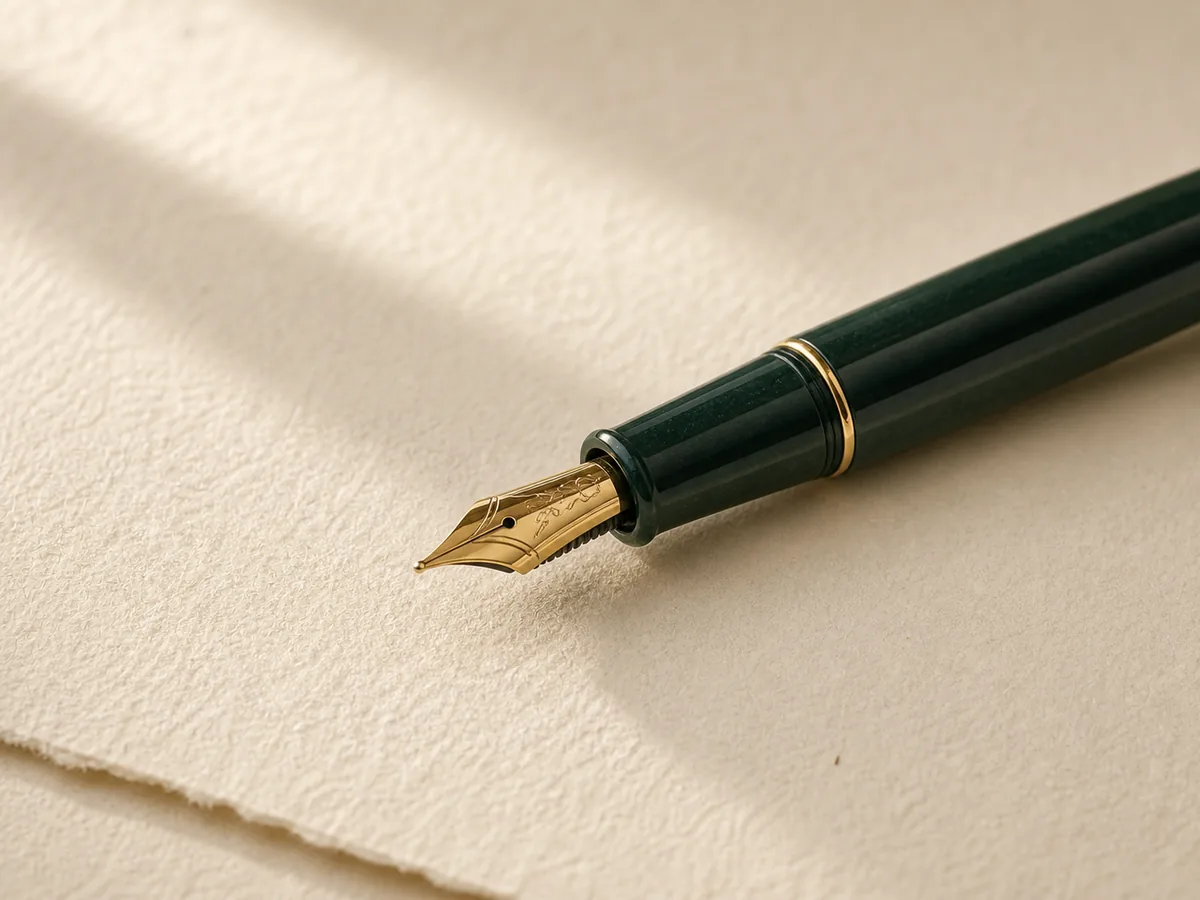
Small handwriting and everyday copy paper usually favor a fine nib. Larger handwriting or more absorbent-free stationery can make a medium nib feel expressive without becoming unruly.
Nib labels are not standardized across every brand. Treat ‘fine’ and ‘medium’ as starting points, then look at real writing samples on paper similar to yours.
02
Comfort beats prestige
For long letters, grip diameter, balance, cap weight, and section shape matter more than a famous model name. If you grip close to the nib, pay attention to threads and steps where the barrel meets the section.
A pen that is comfortable unposted may become top-heavy with the cap attached. Try both ways and choose the balance that keeps your wrist relaxed.
03
Make the whole system easy
Cartridges are tidy and convenient. A converter opens more ink choices but adds cleaning. Pick the filling system you will realistically maintain, then keep one compatible refill with your writing kit.
Start with a washable, well-behaved ink in a readable color. Save permanent, pigment, shimmer, and heavy-sheen inks until you understand the pen’s cleaning needs and the paper’s dry time.